Showing posts with label gaming community. Show all posts

Tuesday, December 30, 2014

Some Things That The Lizard Squad Situation Can Teach Us

If you tried to play any Xbox360/XboxOne/PS3/PS4 games with an online component on Christmas day or a day later, you may have been one of the many gamers worldwide that found themselves feeling like a modern gaming version of the guy from Cast Away. This is most especially true (and somewhat cruel) if you got some of the hottest new games/consoles as Christmas presents. Now that most of the dust has settled, we have to admit that even though it was hell on earth for some people, there are some good things to learn about this whole DDOS attack fiasco. As you read, look for the lessons in red even though you may disagree with some of them.

frustrated mario


First, take a moment to check your entire game library...

If you take some time to look at your library of games, there is a high probability that you have a lot of games that you haven't really touched in a while even though you haven't finished them. You know why is that? It is because those abandoned games are mostly offline and part of you doesn't want that as you are accustomed to playing online and making progress in order to stay in par with your peers be it in aspects like your character level, rank, equipment/items or just the social value of the online experience.


The thing about all this is that competition/cooperative online based gaming is not the only type of gaming that exists and you may have forgotten that even if the online service is off, you are not necessarily stranded as you may have some offline options that otherwise you would be missing out because of the way you pressure yourself to an online only experience. It is good to let go every now and then and enjoy all the games you have even when they are not an always connected (and prone to attacks) experience. Of course before you scoff at the screen and say that The Gamertologist is an antisocial prick, know that this does not imply that you should just become an offline gamer, it just suggests that there are more games out there that you can play to make the best of such a situation where the online service fails because of stuff like the recent DDOS attacks. Well... now that the so called "Distributed Denial of Service" attack has been mentioned, there is another important thing to point out.


army of orcs


A DDOS attack can be more serious than you think...

The first time we saw the explanation of what happened to the two big online gaming networks during the attack, many people classified it as a simple thing that shouldn't take a lot of time to fix, when in fact recovery can be pretty difficult once the attack happens. There isn't a magical instantaneous fix to a DDOS attack and this is because this type of attack is relentless. You can either prevent it before it happens at full force or suffer the consequences.

Picture this, imagine that you have your own small server with a service that accepts let's say 5000 people connected at once. Now imagine that a group of hackers start sending 5000 simultaneous connections to your server and fill each and every one of your available spaces so now your server thinks it is full and doesn't let anybody else in. You then get aware of the situation and you summon your security crew in order to fight back to dismiss those fake connections, but each time your people manage to clear some of them, more keep coming.

This is the equivalent of a handful of knights fighting an endless horde of orcs on a bridge. Unless you somehow close that bridge they will keep coming, but you won't be able to do that unless you can slay a great number of them and win some much needed time in order to been able to run and set the barricades. So once it happens you can only destroy the bridge (shut off the service) and re-build it (bring the service back again) once the battle is over.

greedy

But those orcs aren't even supposed to be able to get near you...


O.k we now agreed that the attacks were not as simple as we thought, but what about the companies themselves? Why is their security not strong enough to prevent or at least minimize the impact of these kind of attacks? The Christmas day incident was completely unnecessary in so many ways that it isn't even funny. This is even more disturbing if we consider that Lizard Squad gave a warning almost a month before Christmas day, so they were either too skeptic or just too lazy. All This means that companies are low-balling their online services, attempting to win a million while spending a cent.

If they are acting like this, then we must pressure them to put some more effort into their network security systems, just so that we don't have to live through those types of annoyances on a service that isn't free. Now on the broader side of things,what's really worrying about the situation is that these types of incidents shows a pretty weak side of the so called digital gaming era and this can mean only one thing...


binary


"Online Digital only" total dominance has been set back for a while because of the attacks.

The lizards have managed to make a really nasty dent the iron clad trust that consumers used to have on these services and that means that the online digital only gaming environment is not be the safe happy place we thought it was. It has become a very nice and convenient service yes, but it has shown that if we ever fully dependent on it there is such a high risk that you may wake up one morning and find out that you have lost all of your games because X group of hackers woke up on the wrong side of their beds.

What Lizard Squad did can never be justified, but we can still at least take the few things that we could learn from the situation and give them some thought. It not only makes you a smarter consumer, but also makes you a wiser gamer and a more conscious tech user that wont be swayed by fads or smoke and mirrors. In any way, we as consumers have to be alert, not only in order to be ready for these kinds of happenings, but also to know the underlying causes and fight against them.

Saturday, December 20, 2014

5 Cool Aspects About Gaming That Are Fading Away

Gaming is a hobby that involves a lot of cool things that that enhance your enjoyment as a gamer be it by yourself or with a bunch of friends. It all seems awesome until you realize that many of those enhancers have been lost in this day and age due to an ever changing market and society. Today we are going to see 5 of them so without further ado, lets get to them.


Mordecai and Rigby Playing

1) Epic long term collective gaming campaigns:
Most of us are probably able to remember the times when a group of friends got hooked with a game and spent a very long time religiously playing and basically making it part of their lives. You may be thinking about mmorpgs, but it doesn't have to be limited to those kinds of games. For example, back in the 16 bit era, all the kids in the neighborhood where I live (myself as a kid included) got hooked with several games through very long time periods. Games like Super Mario World, Sonic the Hedgehog, Legend of Zelda: A Link to the Past, Phantasy Star IV, Zombies Ate My Neighbors were some of those titles that managed to keep everybody playing and sharing ideas, all with the goal of beating the game and/or unlocking its secrets. At the time it was sort of special to receive a visit from one of your friends early on a Saturday morning because they finally figured out how to beat a stage or where to find that secret treasure, a special experience that later on was well converted into online gaming. Of course we weren't stuck with playing the same game 100% of our time, but our main one always remained at the top of our list for months and months.

Nowadays it is all different. Ask yourself when was the last time you and your friends (or contacts) dedicated themselves to a certain game for a period longer than let's say 3 weeks. In this day and age, games are released so close to one another that just when you started to get hooked to one game, everybody changes to another, breaking all cohesion in a matter of hours. This happens because when we see a bunch of new games all released at once (especially since they chose Tuesday to be standard day for game releases) we tend to want to try them all and in the end choose one to keep on playing. What happens after that is that in all the commotion of who is playing what, there is a great chance that you and your friends will end up hooked to different games so that means that you will not be sharing so much play time as you used to. This is unless you can convince others to come play the same game with you, but that seems sort of unnatural because playing one game while been hooked with another is not that fun.


Juste Belmont
This is Juste Belmont from Castlevania: Harmony of Dissonance (2002). At that time
everybody saw him as an awesome looking character, but this same character today may be
labeled as "weird", "unrealistic" or "pale dude that looks like a woman".
2) Content Relativity
Another thing to remember were the times when anything in a game was plausible. There were no boundaries between what looked "too much like a cartoon" and what looked "realistic". A long time ago, a game character or game world could be cool in whatever form they used to show it and things like surrealism, emotion and even wackiness were welcomed with open arms. Things were so simple back then, that characters and game worlds came in just two flavors, awesome or lame.

Nowadays is all about nitpicking. The mainstream gaming community has too many people that have big prejudices against certain types of game content. For them anime style characters are "weird",  a skinny hero with long hair is "emo" and other times they classify characters and environments as "not having enough realism". It is also worth noting how characters now are labeled as if they were real human beings. Stuff like "that character looks too (insert race, nationality or physical characteristic)" or the occasional "omg that is so prejudiced" are the kind of attitudes that are dominant right now, even though they are a sign of disrespect for the artists who are behind a game, especially when the vision behind the art is justified by either the story or game elements. We have to once again learn to see fiction for what it is and not mix it up with reality in such a negative way. This changes the whole ball game for those of us who see that aspect of gaming as something simple and makes us feel left out when gaming companies decide to appeal to the nitpickers.


Game releases then and now

3) Convenient Releases
Once upon a time, games were released on different days without a specific pattern. At some times they would coincide, but in most cases game releases used to be all over and such randomness was good for us gamers. There was also a trend of favoring weekend game releases (a thing that Nintendo still does) which was perfect for anybody who had responsibilities like school, college or work. Had you even been through the experience of been at college/school and finding out that some game you were interested about has released that very same day? Most of the time that piece of information turned a normal routine afternoon into a road trip and that was part of the beauty within all the chaos of the game release schedules of old.

In our present day we as gamers are plagued by a game release standard that is good for retailers, but horrible for us consumers. Most games and updates are released on Tuesdays while a very small group of new releases are unleashed to the public on other days (like Nintendo releasing their games on Fridays and some companies that release on Sundays in special occasions). This puts a lot of pressure on us and makes the whole world of gaming a lot less comfortable.


Videogame community then and now

4) Gaming been something separate from real life and society.
It may be a little difficult for some gamers (especially younger generations) to believe, but there was a point in time where gaming had nothing to do with real life problems. Censors existed back then just like they do now and extremely violent games were indeed a topic of discussion, but there was no real emphasis in things like political correctness or protesting because some aspect of a game resembles a social flaw from real life. Back then, a game was just a completely fictional world, an escape from our daily routines and not something to judge based on your opinion on how society should be. People enjoyed games without mixing it up all with things like sexism, misogyny, racism, profiling and bad stuff like that. Things were a lot simple because we as gamers didn't need any of those complications and we were a lot happier without all the unnecessary controversy.

Nowadays the whole gaming world has become a social battlefield where every game is heavily scrutinized in the search for anything that might "offend" someone. This has gone so far, that even when a game is just announced and still months from been released, if it has even one "offensive" indication (regardless of how dull the argument is) the outrage starts and heads begin to roll as the so called "activists" start spreading the same hate they so much claim to be against.


Console wars of the past

5) Fun fan boy wars
Fanboyism is something that is hated now, but it used to be quite fun in the past. The reason for this is that fan boys of the past battled with facts rather than just saying "boo hoo your platform sucks". From the 16 bit wars up to the Dreamcast vs PS2 showdown, battles were fought, won and lost, but they were very far from been a whine-fest. When 2 gamers started an argument about two or more different platforms most of the people who were witnessing it actually learned something because facts and strong arguments were used in the crossfire and each side understood which were their strengths and weaknesses. There was no "meh" attitude and best of all, there were no labels or personal insults, making a "fan boy" discussion to be just a smart discussion between two or more people with a biased opinion.

Nowadays the closest we will get to those smart discussions is seen pictures comparing a game between two platforms without even taking into account the technicalities that can cause those difficulties and the hurdles that the developers had to go through in order to make the game. It almost seems as if the gaming media itself is helping cause these whine-fests in order to receive more visits and clicks. Sadly no matter how heated a modern fan boy conversation gets, it is very unlikely to learn anything other than clever ways to whine or how to ruin a sarcastic remark by been a poor snub.

The Gamertologist Bottom Line:
These 5 gaming aspects are just a few of the whole lot of things that we are slowly losing as gamers. You may see all this as a nostalgic mind trip, but believe me when I tell you that this is more about how comfortable, simple and convenient the gaming world used to be in the past, supported by facts rather than by nostalgic thoughts. Do we have a chance to stop all this and get back the things that we have lost? I leave that for you to judge.

Wednesday, September 3, 2014

Can The "Hate" Issue in The Gaming Community Be Controlled?

The topic of toxic and hateful attitudes on the gaming community has been hot for a couple of days now, even spawning a letter made by several game development companies asking the public to stop the hate train. The real mind exercise regarding this problem we are facing is asking ourselves how do we control it. I've read a lot of different opinions on several websites in the past days that go from been optimistic to been a gloomy defeatist and it all shows that this problem is not as simple as it seems. This is not a good guys vs bad guys scenario, but a theater of opinions that has gone out of hand and the only chance we have to alleviate this situation is to analyze it and act accordingly. There are a few of those comments I read that still roam my mind so I'm gonna be paraphrasing some of those to explain my point of view on this issue.

Caution Angry Gamer

Comment #1:
Censoring hateful attitudes looks like part of the solution, but it is violating our freedom of speech.

I read this one a lot and all I have to say about it is that freedom is speech is not absolute. This right ends when your "speech" only purpose is to damage the other person and doesn't have any facts to support it. Personally, I do not believe in political correctness and I think that people should say what needs to be said without euphemisms or sugar coating, but on the other hand I consider that criticism must be supported by facts and not by the sick desire of pissing people off or worse. So content makers (especially video game journalists) need to able to recognize these undesirable expressions and get them out of the equation without making the mistake of censoring valid opinions just because the person does not agree with what they are saying.


Kirby Sleeping

Comment #2:
A campaign against bad attitudes on the net is a pipe dream that will never work.

If the campaign is done in a passive way, this comment is true. So in order for it to work we need to be pro-active about it. We need to rally the troops and weed out unproductive trolls and haters from our community in a smart way. The main problem that often happens is that people cannot hold their impulses and start battles with these picturesque users who just doesn't care about your arguments. If you care about the gaming community as a whole, just report these kind of people and move on. Games are supposed to be about fun and not about flame wars on gaming media websites as there is a very thin line between fun arguments and plain stupid discussions. After all, by arguing you are giving these undesirables the attention they crave and that defeats the purpose.


Don't feed them and they will starve.
Comment #3:
Ignoring the trolls won't work because they will just keep getting worse and worse.

The first thing that must be said about this is that trolls and haters don't make arguments about anything, they make sarcastic remarks (be them directly or not) and use them to piss people off or throw you off your argument through insults.This means that it is useless to go to war with them and once again the best course of action is to observe and then report them if keep it up for too long. Nothing will piss off a troll or hater more than denying them their "fun" while kicking them out of the place. Do this enough times and he/she will get tired of trying or at least go somewhere else. At first they will get frantic and will throw everything they have in a last attempt to get people to respond, but you just have to hold your ground.


Greedy Guy
Greed is there, but we must know how to attack it.
Comment #4:
If the companies stop been greedy maybe the hating will stop.

This one definitely has to be a joint effort. We can't deny the fact that companies often do some nasty stuff that piss off the entire gaming community. Sometimes it does feel as if they can't stand direct criticism because they are always wearing their business hat and that is also a problem. On the other hand, the community itself needs to understand that nothing ever gives anybody the right to threaten or harass anybody just because you dislike their product or decisions and even if they messed up some aspect of their personal life we should not be reacting about it as if we were an angry mob of inquisitors in the dark ages. If the person or company has indeed done something that harms the gaming industry or our overall gaming experience in any way, we should heavily criticize them and make our voices known, but not by the way of harassment and threats because that kind of attitude doesn't solve anything and makes us all look like immature kids, giving gamers a bad name. So if anybody does go ahead and resort to that kind of fear techniques, people should just report them and let the authorities deal with them, sort of like what happened to this guy and that case wasn't even about a developer or company.


Dumb Anti Drug PSA
How many people this guy have kept off drugs?  That's a good question.
Comment #5:
This "stop the hate" campaign by itself is an empty thing. 

This one is the only one I can completely agree with. This campaign is empty if we just use the general term "hate" instead of focusing on each of the undesirable actions that we want to eradicate. Notice how on the description for this article I typed the word hate in quotes, that was because we don't need an ambiguous term, but the specific things that cause the problem. The other 4 previous comments deal with some details, but this one sums it all up into one.

On the gamer's side we need to identify the "boss" we want to fight before starting the fight and that can be done by enumerating the different things that need to stop and the things we need to do to. Let's also empathize that we need to give more attention to the games themselves as the awesome entertainment they represent and stop the nitpicking or "meh this game sucks because I say so" attitude.

On the companies side they need to look for ways to be tactful with the gaming community and accept the criticism if it has a solid foundation based on facts. They need to stop acting like this emotionless robot that tries to print money and start acting a little more like what they really are, artists. I am not implying that they should just make whatever the public says regardless of what it is (that would be chaotic), but they should at least keep an open mind and get out of their corporate cocoon and into the gamer mindset from time to time.


Wrapping it up

We can conclude that the "hate" issue CAN be controlled, but the chances of doing that will rely on changing many things that we are currently doing wrong. This applies to both the community and the gaming companies as both try to find a happy medium where the backlash and negative outcomes are minimal. I admit that this really sounds like some sort of utopia, but it isn't. In fact it is quite possible to accomplish because the problems we are having now are very recent, meaning that there was a time when we were doing things the right way, so we just have to search for that sweet spot again.


Sunday, August 24, 2014

High Graphic Expectations and Development Limitations

Technical aspect discussion is something that has been present in almost every console generation since the 90's. At first it was the bit wars (or who's cpu was better), then came the early 3D wars in which gamers were judging the power of a console based on how blocky/blurry or not the models looked. After that came the polygon count wars with the Dreamcast vs PS2 drama and since the middle of the previous generation we have been in the resolution and frames per second war. It is nice to have a technical aspect to discuss (especially if you are a technology enthusiast), but if you over do it and turn it into a petty complaint, then you are causing the gaming community more harm than good.


Conference Room

Let's begin by having a little mental game in order to visualize how a game works inside your preferred machine. Imagine that you and 7 other contestants accepted a million dollar challenge. You are all in a special conference room that that has some kind of limitless temperature regulator built in. You are all surrounded by 100 different objects around you and each of you has a headset on. Now people that are outside the room will begin asking questions about these objects at a rapid pace. Each time any of you gives a right answer the room get a little hotter and if the answer is wrong, ambiguous or not answered fast enough it will get colder. If the temperature gets too low, you lose the challenge (and the money), but if you all try too hard, the room will get too hot and it may become hazardous. The challenge will last 4 hours so you all have to keep it steady until then in order to win.

Game Loop
"Update Game" is where all the magic happens. It is what keeps the game alive.
If we compare this example to how a game works, the room itself is the console and the challenge is the game. The people outside the room asking the questions would represent the game loop, which is programming cycle that is always "asking questions" about each and every element that's in the game at any given time. You and the other contestants who are in the challenge represent the hardware and the objects in the room represent everything that a game has like maps, characters, sounds, commands, etc. You may now be asking yourself what does this example has to do with graphic demands and the answer is simple. In technical aspects,making  a video game is a test of balance. As a developer you have to make a game that looks good, but at the same time make it balanced so it doesn't overwork the machine in which it is been played or cause unintended issues. This is a principle that some gamers need to understand before demanding to have the highest graphical output on every single game.


Evolution of Lara Croft
Graphical evolution in gaming comes with time, not complaints.
Why does these demands hurt our gaming experience?

We need to be aware that everything in computing comes with a price so always having the maximum graphical output means that developers may be sacrificing other features like the size of maps, the variety of things the player can do on the game, chunks of story line content, drawing distance (how far in the distance can you see), the implementation of some game mechanics,etc. Also add to that equation some non-technical aspects like time constraints, market demand, publisher demands, funds, competition,etc. With all these problems in place I think we now have some idea of how hard this process is. To make matters worse, if we make the mistake of giving marketing people the idea that we just want games that look pretty that is what we are going to get, but only by sacrificing game play and innovation. Do we really want that?

We also need to take into account the type of game we are talking about. There are simpler games (like some 2.5D platformers) that run in a perfect 1080p resolution at 60fps even with nice graphics. They work flawlessly, but that doesn't mean that it is an easy thing to do. They managed to do it because the game itself doesn't need that much processing power to run. Now if the game we are talking about is a current-gen open world or sandbox game there is a chance that the "perfection" some of us demand may not be there. Still that doesn't mean that the game is bad, the console is weak or that the developers are been lazy. It is like that because the game makers balanced it all out considering the time, resources and situation they had.


Tales of Xillia 2
Exhibit A: A game that doesn't need cutting edge graphics to be epic...Tales of Xillia 2.
Wrapping it up

The bottom line is that people who like to judge a game because its graphics weren't next-gen enough for them need to think again because they are not only been unrealistic, but they are also contributing to the development of shorter and less innovative games (especially if marketing people are involved). They should try to get into a new mindset and enjoy games for what they are. This way they give designers and developers a break, so they can create masterpieces instead of finding themselves forced to pop up games from a template as if it all were an assembly line. It is better to have a normal, but great game rather than a pretty one that feels uninspired and bland. I leave with you with that folks, game on.


Friday, August 15, 2014

The Different Types of Modern Fanboys

There was a time when been a "fanboy" was kind of fun. It was mostly a charade, a make believe as in reality everybody really enjoyed the "other team's" system and even when two (or three) fanboys did get into an argument, they mostly used facts up to the point when both of their arguments cancelled themselves and all was solved with a slice of pizza and a good gaming session. Unfortunately that was the past and now, we have a type of fanboyism that goes more around the toxic side and it has never been more worse than on this current generation. Reasons about why fanboyism turned from a fun mental exercise to a mindless game of empty arguments are plenty, but instead of mentioning reasons alone, we will see some of the types of fanboy that our modern times have spawned. Be aware, some of these may have existed in the past, but they were never so obvious as now.


Tunnel Vision Fanboy
Never argue with one of these, it will never end.
The "Tunnel Vision" Fanboy

This one is pretty stupid, but one of the most noticeable. Every time an exclusive game releases, we are bound to see their countless comments about how the game is "bad" and most of them clearly state that they are fans of the opposite platform. It doesn't even matter if the game goes out to become a big seller and win lots of awards, because based on the tunnel vision fanboy mindset it will always have a flaw that makes them talk trash about it. Sometimes they use nitpicking or other times try to act as if they are making an educated criticism or "sincere" statement, but we all know that it is crock from the moment we see it. We also know that there are people that can legitimately dislike a game for a number of real reasons, but if you read between the lines you can spot the real game critics and those who are throwing dirt on the game just because they are jealous.


Numerically Obsessed Fanboy
These ones make the protagonist of A Beautiful Mind look like the sanest guy on earth.
The Numerically Obsessed Fanboy

Take the word "numbers" here as everything that goes away from the games themselves and is used as a means of criticism. Things like financial numbers, resolution and frame rate values, number of copies sold and even how much time (in years) they spent making the game. The thing about this is that none of the previously mentioned things should matter. A game is all about how much fun we have with it and not how many big numbers it can crunch up. Fanboys should leave that stuff to industry analysts and focus on the things that really matters. Next time you see one of those, ask them to sell their consoles and buy a calculator and maybe some spreadsheet software instead.


Nostradamus Fanboy
If it were up to these people, we wouldn't have games anymore.
The Nostradamus Fanboy

Nostradamus was an apothecary and a seer from the 1500's who is mostly remembered for his apocalyptic predictions and prophecies. Now more than 500 years later this kind of fanboy is trying to continue his job, but from a videogame industry perspective. These are the ones that are constantly predicting doom for gaming companies based on trivial stuff that happens all the time and should be considered normal. Things like if a developer quits the company (OMG they are doomed), if the company closes one of their divisions (Yep, the company is going down), if the company loses some profit (Oh the humanity, bankruptcy is imminent!) and that sort of stuff. Most of the time it sounds as if the Nostradamus fanboy wants the company to fail, which is a pessimistic and screwed up way to think, especially when gaming is all about enjoying our games and not about creating doomsday prophecies or reflecting our own frustrations.


Quick Draw Fanboys
At the time you first read about an important gaming thing, these people already flooded the net.
The Quick Draw Fanboy

This kind of fanboy put Jesse James to shame, as they are some sort of neurotic individuals that like to jump the gun for anything, firing from the hip faster than in a glitched first person shooter. This is really noticeable when an important decision is made by a company and they just go nuts with nonsensical rants on forums and gaming pages, the creation of countless online petitions and stuff like that. This is the fanboy that goes into a temper tantrum that can only be surpassed by the ones thrown by toddlers when their parents refuse to buy them a toy while browsing through a department store. The real bad thing about these picturesque fellows is that they give a bad name to the entire gaming community, making the world believe that we are spoiled, self entitled big babies.


Michael Myers Fan Boy
These ones are the most embarrassing of all...
The Michael Myers Fanboy

For those of you that don't know, Michael Myers is the legendary villain of the slasher horror films called Halloween. He is dedicated to appear out of nowhere and stalk his victims (certain people) until he murders them in gruesome ways. Well, in the case of fanboys (and not necessarily console fanboys) these are the ones that get into the developers personal lives if they don't do what they want. This means stalking them on social networks, forums, gaming articles and everything related to that person. There have been several accounts of intense trolling and even death threats, up to the point that some developers have decided to quit the industry altogether. I am well aware that we should defend our interests as consumers and that is alright, but nothing ever gives us the right to go all personal on somebody because we can't accept the decision they made. Sometimes it isn't even about a game, but a comment or expression made by the person that manages to spark hatred among weak minded people. If this is now, I don't want to imagine what would happen if this behavior continues 20 years into the future. In what thing will it become? Public executions or developer vs developer roman coliseum styled death matches?


Gaming
Wrapping it up

There you go folks, 5 different types of modern fanboys that completely spoiled what been a fanboy was all about. Competition is always good, and brand loyalty is fine to an extent because everybody has their unique taste for gaming and may feel like home in one platform ecosystem more than in the others. The problem begins when this goes out of control and we lose sight of what the essence of gaming is. We must go back to the gaming attitudes of the past, when gaming was 100% about gaming and even if competition was fierce, nobody was losing their heads over trivialities.

Tuesday, July 29, 2014

5 reasons why at this point, game remastered versions are alright.

After getting The Last of Us Remastered version today, I realized that even when many gamers bash the idea of an updated version of a game, for the first time in gaming history a second release for a game has become a good thing. Don't get me wrong, a half-baked rehash is still an awful thing to do, but when done right it turns from a "cheap cash in" to an opportunity for gamers and developers alike. Now in order to prove this point of view let's see the arguments that support it:


going too fast

1) The market has become too fast paced.

There used to be a time where a game that became a smash hit, lasted at least a year in the top along with a runner up that always followed close behind, but that thing doesn't happen that often anymore as gaming companies are always trying to keep on each other toes almost making it a race for the gaming community. Competition can get fierce and sometimes that becomes a flurry of games coming in a very tight time span. Take for example the next coming months from September to the holidays, there will be a lot of game releases on different platforms. This is not only a wallet slayer, but also a very time consuming thing as most of these games have online modes that require a lot of play time in order to fully enjoy them. When this happens, some of the games fall through the cracks and are not picked by all the potential buyers they should, (especially when it is a type of gamer that is always keeping up with novelty) so a remastered version of a game becomes a second chance to catch those that didn't bought the game when it was released for the first time and a chance for some gamers to get a little extra for their money as a reward for still having interest in the game even thought is is not new anymore.


Eat Sleep Play

2) Busier gamers get a break.

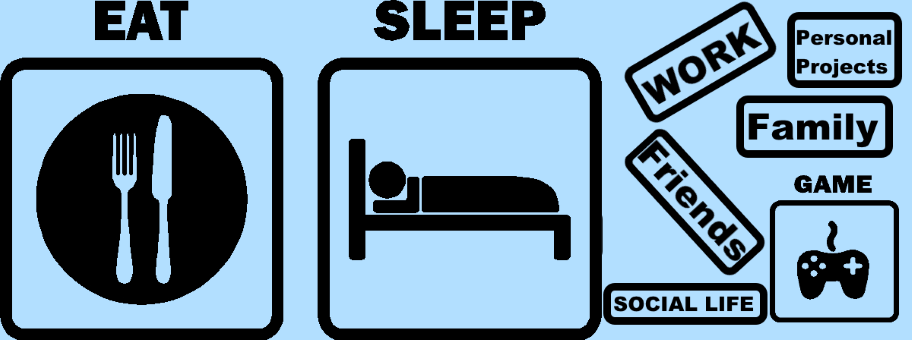
Gaming is for life, but let's face it. A lot of gamers right now are part of the working class, have a family and/or personal projects to attend to, so they don't have the same amount of time as they used to before getting these responsabilities. Sometimes when a wave of games come by, they can at most play 1 or 2 titles at a time so in this case a lot of new releases are just left hanging. Some of you may be thinking "So what? They just have to buy the games they missed at a later time", but it isn't that easy when we consider that new games keep coming all the time and these people gaming interests often get divided and conflicted (online oriented games vs single player experiences) when time is scarce. This is the reason why remastered games nowadays seem to be a very appealing option for gamers who have that kind of time limitation, especially when the remastered version includes past DLC and/or gameplay extras.


3) It breathes some life into a generation that had a slow start.

This time around, compared to previous console generations, we are seen a much slower pace in early game releases as too many third party companies are still clinging to the previous generation. This had kept the new consoles on some sort of gaming drought that has been hitting for almost a year, with most of the anticipated heavy hitters still on the 2015 list. On this case, remastered versions (done right) serve to inject some interest when they manage to give a clear contrast between the previous and current generations. That contrast is one of the things the begins knocking on people's heads like a drop of water on a rock, until it breaks it and get them to support the platform because they actually see a tangible difference. An example of the complete opposite is the Wii U launch fiasco, where people thought that the new machine was just another Wii and did not ran to the stores to get it as they did with the Wii itself.


Metro Redux

4) Keeps interest in the franchise.

We know that sequels on some famous franchises are almost a given, but these things take time. In order to keep the interest in the franchise going strong until that new game arrives, companies often use remastered versions and that is alright if they do it without the product been a cheap rehash of the same game and if the new version doesn't come a very long time after the original, like Zone of the Enders HD which was one that came too late to have any effect on a good franchise that was just lost in time due to several years of neglect. At this time, remastered versions of games that have been released in the last 2-3 years are good for their corresponding franchises as long as they make it count and don't try to low ball the gaming community or pretend that rehash from a 5+ year old game will sell the same as it did when it first came out. It is also worth pointing out that the success or failure of a game rehash SHOULD NOT be used as a barometer to measure the franchises worth (Konami, I'm looking at you).


Battle Programmer Shirase

5) Serves as exercise for game developers.

Right now, as many companies are still working with previous generation projects, it is a good thing for them to flex their developing muscle a little and warm up in the developing process of the new consoles. While they work with the new SDK (system development kit) tools that each console has to offer, they can get new ideas and test the implementation of various new things while working on a remastered version of their game. This makes it easier for them to explore their own concepts a bit and discover what new things can be implemented in the next game on the franchise. Of course, most of us don't see this happening as we don't have insider access to big game development studios, but in any developing environment (gaming and not) it is very common to make new ideas out of revisiting the old ones, spawning a lot of nice surprises and "aha" moments.


Last of Us Remastered

Wrapping it up

Based on how the videogame market is moving right now, remastered versions of games are not the dreaded money grubber scheme that they used to be. This is because we as a community have become smarter and by materializing our opinions with our wallets, we have forced companies into putting a little more effort into their game rehashes. It may be a temporary thing, but for now they seem to work and deserve a chance. Remember that if you support the franchise now, you are giving a clear message to publishers, saying that you will also support the new games that are to come in the future.

Saturday, July 5, 2014

Is the real evolution of gaming sleeping in the past?


At least 10 - 15 years ago, one could easily tell that every gamer was really hopeful about what was to come in the future as the end of a great gaming era was near. It is understandable that many people (especially younger gamers) would say that games back then had bad controls, primitive attempts at 3D graphics, awkward animations and similar faults, but on its core it was a very advanced phase in gaming history ruled by game design and story writing, meaning that for 50 dollars those video game aspects brought you some deep and compelling experiences that are still legendary up to this day. The problem is that somewhere along the way, everything that had been built up to that moment was just forgotten and replaced with half-baked practices. Don't get the wrong impression, gaming on this day and age is still great, but calling it an "evolution" is a little off, considering many of the things that were left behind and here are some of them.

game designer cartoon
Sad situation that happens even to the most famous of designers.

Freedom of design

The backbone of any video game is its design, it is something similar to making the layout of a stage on paper, drawing some platforms, some power ups, enemies and there you go, you have your own stage. Of course game design in the industry is not that simple, but it is as important as it has ever been. What happens with game design nowadays is that it should had stayed as it was, free. Writers and game designers make the hell of a team when they can work their ideas on a hassle-free environment, without somebody telling them that their ideas cannot be used because of some "market issue". For the writer it becomes very hard to come up with focused material if his/her ideas get blocked by the people upstairs. As for the designer itself, the time constraints, market trends and resource limitations have diminished what once was the biggest process in the making of a game and turned it in to an over-simplified version of itself.

 The making of Silent Hill 2

If you watch some "making of" documentaries about some older games, you can see how much creativity the developers poured into their projects when left loose with their creation.  These creative liberties are something that should had kept going in order for a real gaming evolution, as the creative minds would had met modern technology and would had been able to make wonders. There are some occasions in today's industry where games are designed as they should be, but you will have to look around a little in order to find them as it is not longer the rule, but the exception.

quick time events
Cutscenes vs game play. Which one you prefer?

Freedom to the player

Once upon a time, seen a cutscene or CGI video was something that was seen mostly as a reward. It was that small moment you had when you saw the story line advancing along with some eye candy, all in cinematic fashion. It was the graphic artist moment to shine and we all loved it. The problem right now is that sometimes if feels like some long cutscenes should had been game play instead. At other times a "quick time event" is all that it takes to ruin the game mood and leave you feeling like you should had played through that situation instead of pressing some button combination. 

Things like these take freedom away from the player, making the game shorter and throwing away some of the thrills that would otherwise be challenging and fun. It is as if they sometimes borrow things from the "on-rails" game play style to save some time or just try too hard to make it look like a Hollywood movie. As time passes there should be more game play and not less, that is one important thing in any game that claims to be part of the gaming evolution.

world map
Censorship should not be part of our modern world.

Freedom from cultural limitations and censorship

Cultural limitations have always existed, that cannot be denied, but for some time it seemed as if the line that divide games developed in different countries was blurring. Foreign games were trending in the west as well as American games were doing good in other places in the world regardless of topic or style. This train of cultural diversity in gaming was up and picking speed until censorship got tighter and it made it grind to a crawl. Now every game that is ready to be released suffers intense scrutiny that looks into the smallest of details in order to classify them as "not appropriate" for certain cultures. 

The acceptance of fiction for what it is has become something that the censors refuse to accept and this causes problems when a game tries to get a localization process. Along with censorship, another cultural problem is profiling. Marketing people have created this "rule" that basically profiles each region of the world and embed them to certain types of games and themes. This is also something that was at the verge of dying off, but made a comeback and (sadly for us) it is stronger than ever. It is hard to understand why haven't we parted ways with those things. Many other markets in the world have adapted to globalization, so why haven't the gaming industry done so?

angry gamer
The angry super "hardcore" gamer strikes again...

Freedom from ourselves

The consumer is a great part of what drives an industry and the gaming scene (that's us) is doing a poor job at it, even if it isn't entirely our fault. There was a time when a gamer's only concern was playing games and sharing experiences. At that time social networks weren't as popular, we relied a lot on magazines and word of mouth and all the tools we had as video game fans were simple, but at the same time a gamer was just a gamer, which helped to sustain an industry that was tailor made for us as gamers. Yeah, there were fan boy wars and things like that, but the community was not divided in niches, hardcore, casuals, "gamer wannabes", "real gamers", "dude bro gamers", "geeky gamers", "frikis" (in Spanish), "hipster gamers" and other labels that just seemed to turn it all into a game of factions, which gave game companies an incentive to divide the market as well and just give more attention to the "faction" that seems stronger instead of just the simple task of making games regardless of groups.

We as the consumers, got led by the marketing people into believing that we were all separated into groups, entirely working to their advantage instead of ours. Before that, they did not had a clear view of the market so that forced them to remain at a high level of quality at all times, but now they can just lay back and do whatever they want, following the easy money because they know what is trending and what is not. It is very unlikely for this to happen, but for a real gaming evolution to occur, we need to go back to been as single unit, gamers. This way we can throw a little fog of war in to the market and recover some of the advantage we had.

video game characters
If some of these characters have stood the test of time, other things must as well.

Wrapping it up

In conclusion, the real gaming evolution is all about making the gaming industry to be pro gamer again. It is the return of different things that we used to have a long time ago. It is the freedom of the past + the technology of today which equals a leap in gaming that we haven't seen for a long while. Graphics get better, systems become more powerful, but the core of the gaming industry is what needs to take some things from the past in order to really move forward, anything less than that is just a new version of the same thing.